Mental Health Social Work Assessment: Essential Skills for Social Workers Preparing for AMHSW Accreditation
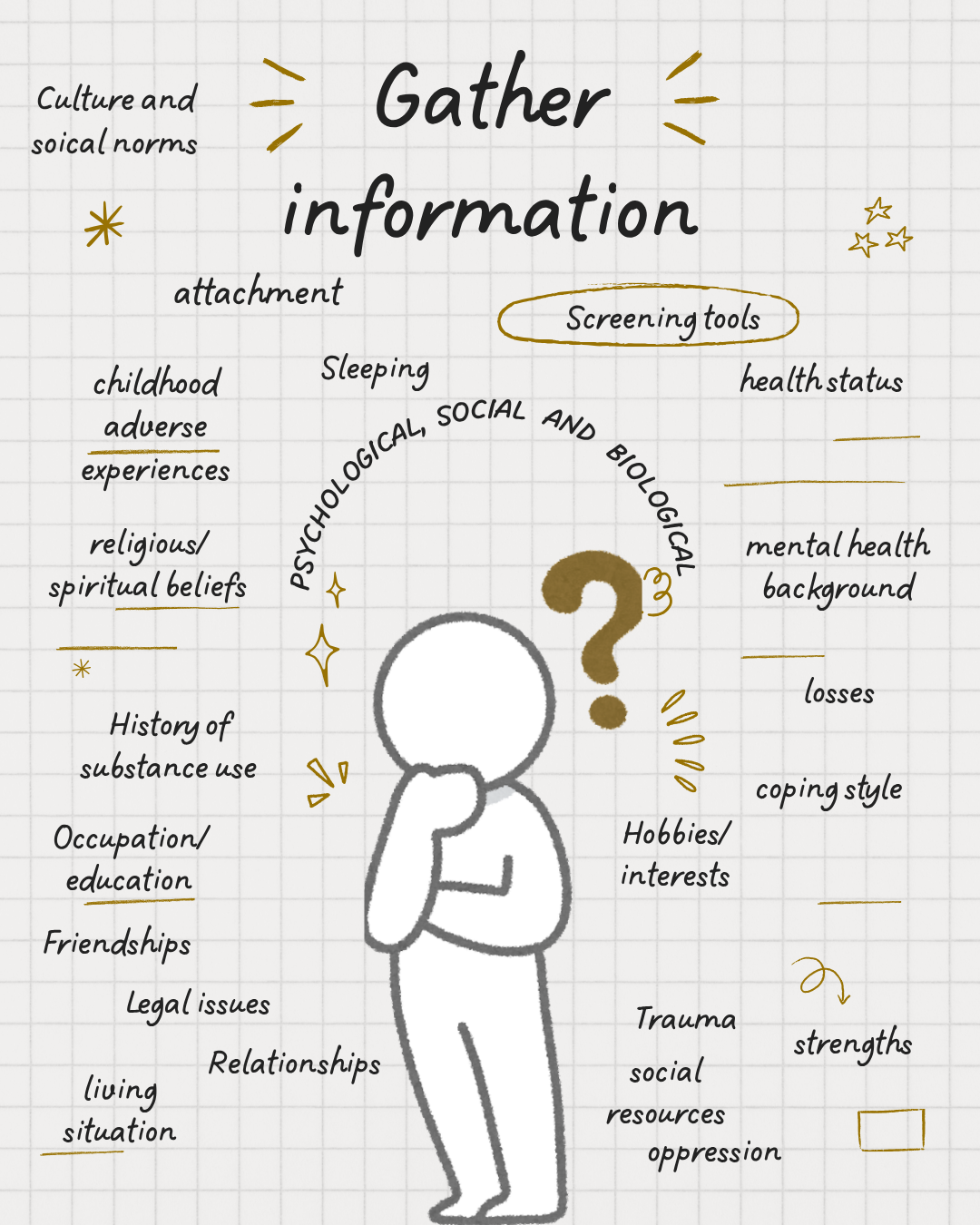
Table of contents
What Is a Mental Health Assessment in Social Work Practice?
Mental Health Assessment Skills for Social Workers
Presenting Concerns
Mental Health History
Psychosocial Assessment
Trauma-Informed Assessment and Therapeutic Frameworks
Screening Tools in Mental Health Assessment
Risk Assessment in Mental Health Social Work
From Assessment to Case Formulation
Developing Mental Health Assessment Skills Through Supervision
What Is a Mental Health Assessment in Social Work Practice?
For social workers developing their mental health practice, learning how to complete a comprehensive mental health assessment is one of the foundations of becoming a confident clinician.
For many Australian social workers working towards Accredited Mental Health Social Worker (AMHSW) accreditation, assessment can feel like one of the biggest areas of professional development.
You may already have strong social work skills in areas such as relationship building, advocacy, understanding systems and supporting people within their social context.
The challenge is often learning how to bring these skills together with mental health assessment frameworks, clinical reasoning and evidence-informed practice.
Mental health social work assessment is not simply about collecting information.
It is about developing an understanding of the person, their experiences, their strengths and the factors influencing their current wellbeing.
Based in Adelaide, South Australia, I provide social work supervision for practitioners locally and online across Australia, supporting social workers to strengthen their mental health assessment skills, clinical reasoning and confidence preparing for AMHSW accreditation.
A mental health assessment is a collaborative process of understanding a person's current experiences within the broader context of their life.
Unlike an assessment that focuses only on symptoms, social work assessment considers the interaction between:
psychological experiences
relationships
social circumstances
past experiences
current stressors
strengths and protective factors
A comprehensive mental health assessment aims to understand:
What has brought the person to support now?
What factors may be contributing to their difficulties?
What strengths and resources can support change?
What risks need to be considered?
What interventions may be helpful?
Assessment provides the foundation for case formulation and intervention planning.
Mental Health Assessment Skills for Social Work Practice
For social workers developing mental health practice skills, assessment involves developing the ability to gather relevant information while maintaining curiosity about the person's experiences.
Areas explored may include:
Presenting Concerns
Understanding why the person is seeking support and what difficulties they are currently experiencing.
This may include:
Emotional distress
Anxiety or depression symptoms
Trauma-related responses
Relationship difficulties
Changes in functioning
Impact on work, study or daily life
It is also important to explore the person's own understanding of what is happening and what they hope will change.
Mental Health History
Understanding previous experiences can provide important information about patterns, strengths and previous attempts to manage difficulties.
This may include:
Previous mental health concerns
Previous therapy experiences
Medication history where relevant
Previous coping strategies
Helpful and unhelpful interventions
Previous periods of recovery or increased difficulty
Psychosocial Assessment
One of the strengths of social work practice is understanding people within their broader context.
Psychosocial assessment may explore:
Family relationships
Attachment experiences
Childhood experiences
Trauma and adversity
Significant life events
Relationships and supports
Employment and education
Housing
Financial stress
Culture and identity
Community connection
These factors are not separate from mental health.
They often influence how people understand themselves, relate to others and respond to challenges.
Trauma-Informed Assessment and Therapeutic Frameworks
The information we gather during assessment is influenced by the person in front of us, the presenting concern and the clinical framework we are working from.
Different approaches may guide us to explore different areas.
For example:
A clinician working from a trauma-informed or EMDR framework may explore:
attachment experiences
adverse childhood experiences
significant life events
current triggers
negative beliefs about self
emotional and body responses
strengths and resources
This does not mean assuming trauma is the cause of every difficulty.
Rather, it means remaining curious about whether past experiences may continue to influence present-day responses.
Similarly, other therapeutic frameworks may guide clinicians to explore different patterns, such as thoughts, behaviours, emotions, values or coping strategies.
Strong assessment is purposeful.
It is not about asking every possible question.
It is about understanding why you are asking the questions you ask.
Screening Tools in Mental Health Assessment
Standardised screening tools can be valuable components of mental health assessment.
They can support conversations, identify areas for further exploration and monitor change over time.
Examples include:
Anxiety and Depression Screening
Common tools include:
Depression Anxiety Stress Scales (DASS-21)
Kessler Psychological Distress Scale (K10)
These tools may support exploration of symptoms related to anxiety, depression and psychological distress.
Trauma Screening
Examples include:
PTSD Checklist for DSM-5 (PCL-5)
Adverse Childhood Experiences Questionnaire
Life events checklist (LEC-5)
Trauma screening tools may support further exploration of trauma-related symptoms and experiences.
Eating Disorder Screening
Examples include:
SCOFF questionnaire
This can support identification of possible eating disorder concerns requiring further assessment.
Psychosis-Related Experiences
Depending on the setting, population and presenting concerns, assessment may include exploring:
changes in perception
unusual experiences
beliefs that cause distress or impact functioning
thought processes
changes in behaviour or functioning
Screening tools should always be considered alongside clinical interviews, professional judgement, risk assessment and the person's own experience.
They support assessment; they do not replace it.
Risk Assessment in Mental Health Social Work
Risk assessment is an important component of mental health social work practice.
This may include exploring:
Suicidal thoughts
Self-harm
Intent and planning
Protective factors
Risk from others
Domestic and family violence
Substance use
Child safety concerns where relevant
Risk assessment is not a one-time task completed during an initial appointment.
It is an ongoing process that requires clinicians to continue considering both risk factors and protective factors throughout their work.
From Assessment to Case Formulation
Assessment is the beginning of understanding a person's experiences.
The next step is asking:
"How do these pieces fit together?"
This is where case formulation becomes important.
A formulation brings together assessment information to develop a working understanding of:
what may be contributing to difficulties
what may be maintaining patterns
what strengths can support change
what interventions may be most helpful
You can read more about this in the next blog:
Case Formulation for Social Workers: Using the 5 Ps Framework to Guide Mental Health Practice.
Developing Mental Health Assessment Skills Through Supervision
Developing confidence in mental health assessment takes time.
Many social workers entering mental health practice already have strong foundational skills. Supervision provides a space to strengthen the clinical reasoning that connects assessment information with formulation and intervention.
Social work supervision can support you to:
strengthen mental health assessment skills
develop confidence with complex presentations
reflect on clinical decision-making
build case formulation skills
connect social work knowledge with mental health frameworks
I provide social work supervision in Adelaide and online across Australia for practitioners developing their mental health practice, including social workers working towards AMHSW accreditation.
Supervision offers a reflective space to strengthen your confidence, clinical reasoning and skills as a mental health social worker.
